Gunite & Concrete vs Ecopool S-Series
If you want a pool that's easier to live with, faster to own, and stronger by design, here's the case for S-Series over gunite
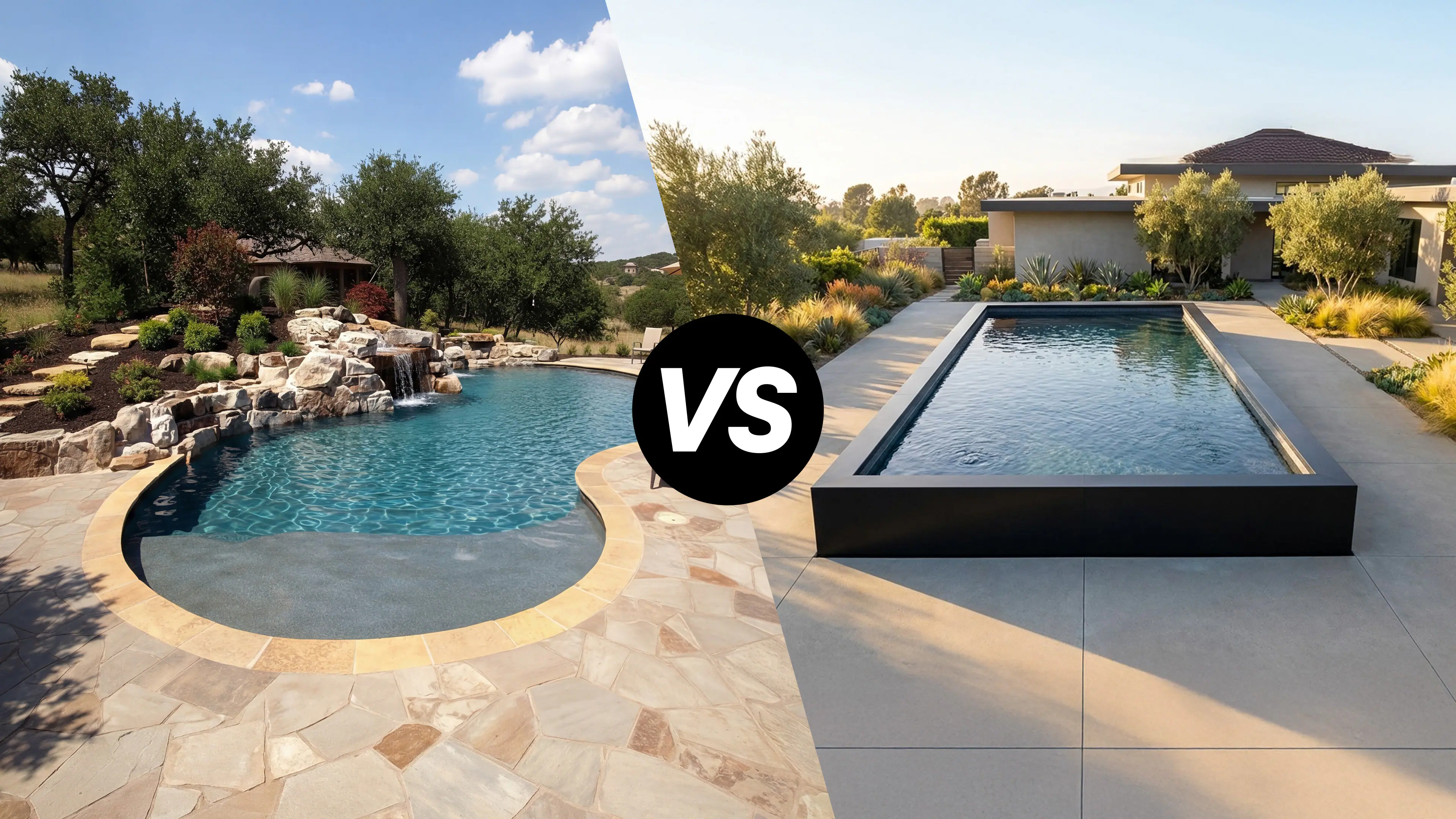
Gunite and concrete pools have been the industry default for decades — and for good reason. They offer freeform shapes and a sense of permanence. But once you look past the marketing and into the ownership reality, a different picture emerges: months-long construction timelines, surprise change orders, porous plaster that demands constant attention, zero insulation, and replaster bills that arrive like clockwork.
If you want a pool that's easier to live with, faster to own, stronger by design, thermally comfortable in every season, and future-proof on cost and sustainability, the Ecopool S-Series beats gunite on every homeowner outcome that matters.
This comparison lays out exactly why — with real numbers.
"S-Series compresses on-site work to 1–3 days, removing the biggest sources of regret with gunite: long jobsites, surprise change orders, and future replaster bills."
At-a-Glance: S-Series vs Gunite/Concrete
| Dimension | Ecopool S-Series | Gunite/Concrete |
|---|---|---|
| Time to swim | 1–3 days on site | 3–6+ months |
| Maintenance | Low — smooth, non-porous, inert surface | High — porous plaster demands more brushing and chemistry |
| Thermal comfort | R-8.5 to R-10 insulated walls | ~R-1.5 (no insulation) |
| Surface durability | Commercial-grade membrane — 25–30 yr expectations | Replaster every 7–15 years |
| Installation flexibility | Inground / on-ground / semi-inground | Primarily inground only |
| Excavation risk | Optional — go on-ground and skip it entirely | Mandatory; rock conditions create major cost swings |
| Mobility | Relocatable with qualified riggers | Permanent — demolition only |
| Sustainability | Recyclable membrane and Architectural Edition panels | Demolition waste |
Easier to Maintain — Clearer Water, Fewer Chemicals
The S-Series interior is a German-engineered architectural membrane (Zycore™). It's non-porous, UV-stable, heat-welded, and chemically inert. Algae struggles to grab hold, so you brush less and dose less.
Plaster is the opposite. It's porous and alkaline — it soaks up chemistry and harbors biofilm if you don't stay on it. That difference shows up every week in your maintenance routine.
| Task | S-Series (Zycore™) | Gunite/Concrete |
|---|---|---|
| Wall/bench brushing | Light, flat-surface sweep 1×/wk | Heavy scrub 1–2×/wk to scour pores |
| Robot effectiveness | High — smooth walls | Reduced on ridges and roughness |
| Algae tendency | Low — non-porous surface | Higher — porous plaster |
| Chemical demand | Lower over time | Higher — surface absorbs chemistry |
| Surface issues | Flexible, weld-sealed | Etching, mottling, stains common |
Less work. Less guesswork. Clearer water most days of the year.
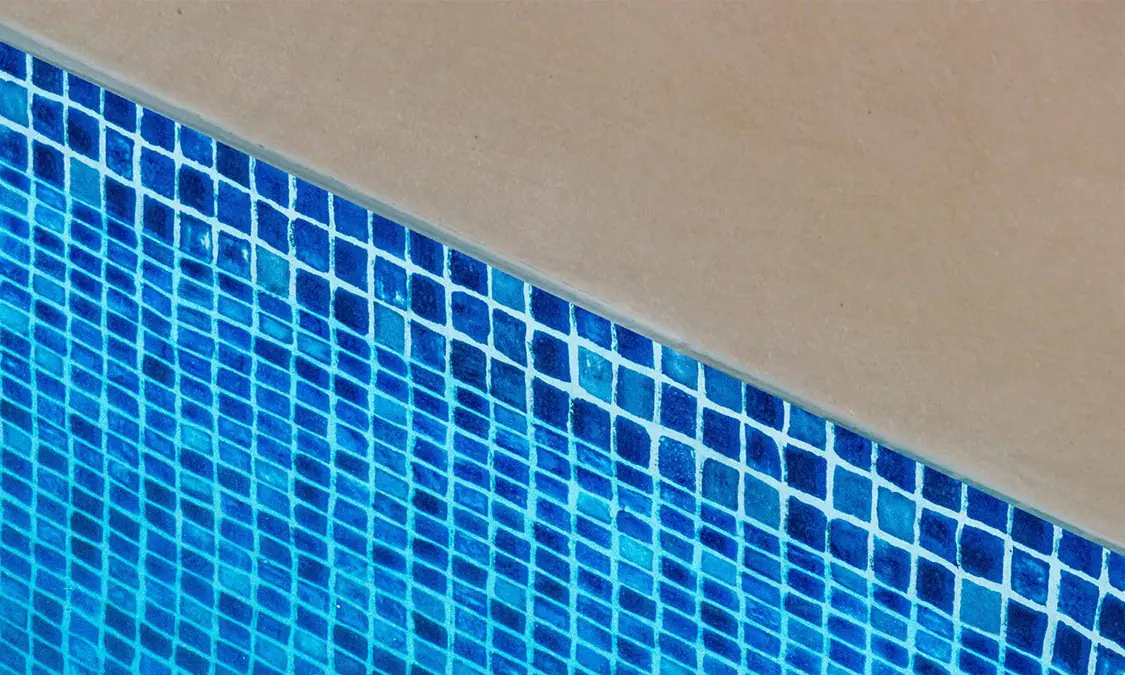
"Zycore™ is non-porous, UV-stable, and chemically inert — algae can't grab hold, so you brush less and dose less. Plaster can't say the same."
No "Concrete Cancer" — Skip Cracking, Spalling, and Replaster Loops
Homeowners often describe rebar corrosion, efflorescence, and crack-driven spalling as "concrete cancer." It's the predictable lifecycle of a rigid cementitious shell sitting in chemically treated water and shifting soil.
The S-Series doesn't rely on a rigid cementitious shell as your water-contact surface. Its reinforced, welded membrane is decoupled from the structure, so minor ground movement doesn't telegraph into cracks. The membrane is chemically inert, non-staining, and long-life — 25–30 year expectations are common in commercial practice.
With gunite, replastering typically hits between year 7 and 15. That's a $10,000–$25,000 bill that comes back on schedule. S-Series eliminates that cycle entirely.
Stronger by Design — and Why That Matters
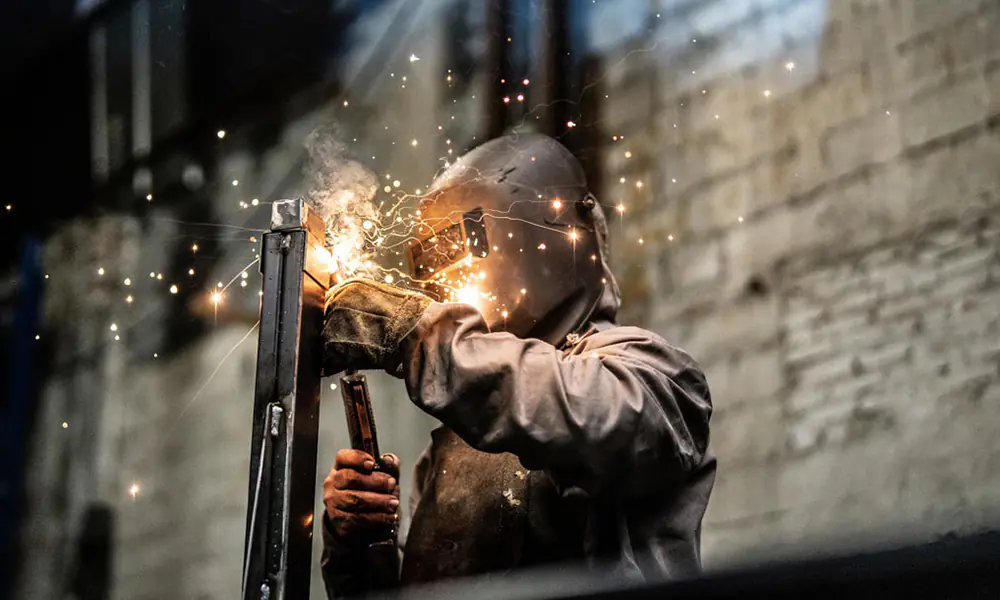
Structure: The S-Series uses a high-strength rectangular-tube steel frame (~80,000 psi yield) with an insulated sandwich shell — think aerospace stiffness meets freezer-wall thermal science. Modules bolt into a monocoque skeleton on site. You get engineered load paths, consistent welds, and factory QC.
Finish: Inside that structure sits the commercial-grade Zycore™ membrane — engineered for tensile strength and tear resistance, then heat-welded for a continuous, watertight liner. It's the same class of technology used in European competition pools and major U.S. venues.
Why it wins for you: Rigid plaster tries to be structure and finish at once. When soil moves or seasons swing, you see it — cracks, stains, delamination. The S-Series separates structure from finish and gives each the right material. That's modern engineering.
| Element | S-Series | Gunite/Concrete |
|---|---|---|
| Primary frame | Rectangular-tube steel | Rebar cage in shotcrete |
| Finish | Reinforced welded membrane | Plaster (rigid, porous) |
| Thermal core | 2" closed-cell insulation | None (R ≈ 1.5) |
| Factory QC | Yes — jigs, repeatability | Built outdoors, weather-sensitive |
"Rigid plaster tries to be structure and finish at once. S-Series separates them and gives each the right material — that's modern engineering."
The European Commercial Standard — Brought Home
Reinforced, heat-welded membranes became the go-to finish in Western Europe for competition and municipal pools because they last, clean easily, and shrug off UV and freeze-thaw. U.S. high-profile sites now use them for the same reasons — the U.S. Olympic Training Center, The Met, and the White House all feature this class of interior technology.
Historically, this approach was too labor-intensive for backyards. Ecopool solved that by moving the work into the factory and investing in automation. The result: commercial durability in a residential budget.
"Expensive Inputs, Smarter System" — Why S-Series Can Still Cost Less
Structural steel tubing and skilled welding cost more than sand and cement. But factory production flips the math:
- Scale and repeatability drive down unit labor
- Precision jigs cut rework
- No general-contractor markup on 8–10 subcontractors; most of the spend is in the factory
- Short on-site window means fewer surprises and fewer weather costs
| Item | Traditional Gunite Builder | S-Series + Local Pros |
|---|---|---|
| Builder/GC margin | ~$30,000 | $0 — you hire 2–3 pros directly |
| Subcontractors & materials | ~$55,000 | ~$30,000 (factory pool incl. equipment) |
| Electrical / site prep / misc | ~$5,000+ | ~$6,500–$10,000 |
| Total example | ~$90,000 | ~$40,000 |
| On-site time | 3–6+ months | 1–3 days |
The traditional route carries a ~40% builder margin distributed across 8–10 subcontractors. S-Series factory pricing plus direct-hire local trades keeps more of your budget in the pool itself.
Thermal Comfort — the "YETI vs Solo Cup" Advantage
Gunite walls sit at roughly R-1.5. S-Series walls deliver R-8.5 to R-10. That gap shows up every night and every energy bill.
| Metric | S-Series | Gunite/Concrete |
|---|---|---|
| Wall R-value | R-8.5 to R-10 | ~R-1.5 |
| Overnight heat loss (example) | 0.4–0.6°F | 1.8–2.2°F |
| Heater runtime | Fewer cycles | More cycles |
Fewer heater cycles in winter, less "bathtub water" in August. It feels better stepping in and it costs less to hold your setpoint. Think of it as the difference between a vacuum-insulated bottle and a disposable cup — the water inside is the same, but one holds temperature and the other bleeds it.
"S-Series walls are R-8.5 to R-10 — gunite sits at R-1.5. Overnight heat loss: 0.4–0.6°F vs 1.8–2.2°F. You feel the difference. Your energy bill does too."
Install Anywhere — Inground, On-Ground, or Semi-Inground
Choose the look and logistics that fit your property and budget:
- Inground for a minimalist, ground-flush aesthetic
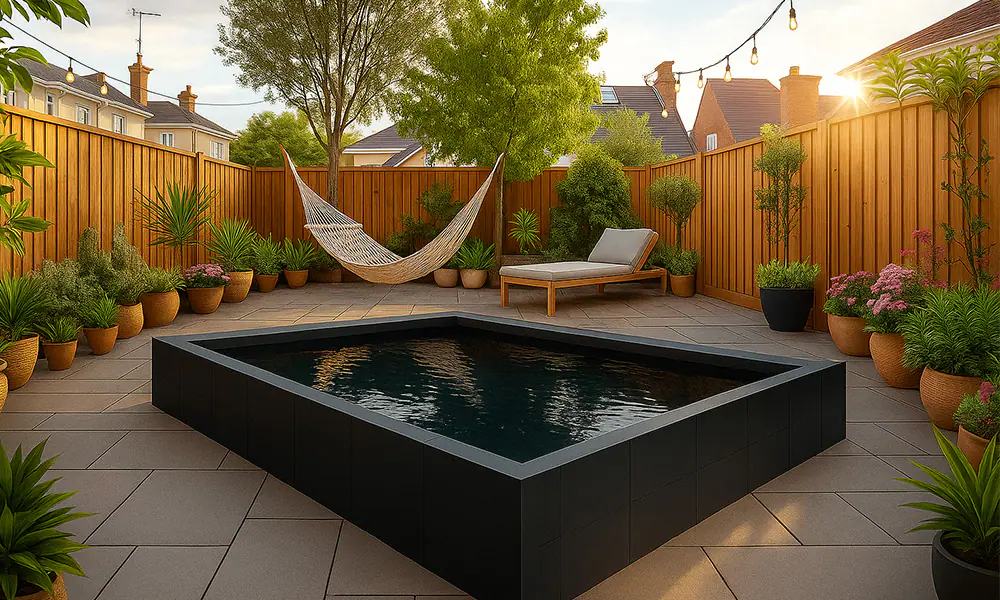
- On-ground to avoid excavation entirely — keep landscaping intact and skip rock-hammer bills (often five-figure in hard-rock markets)
- Semi-inground to ride slopes with less dirt moved
On-ground placement also delivers practical bonuses: less soil and mulch wash-in during storms, better 360° service access, and fewer contaminants from deck dust. Windborne debris still happens, but you avoid most runoff-related messes that plague inground plaster pools.
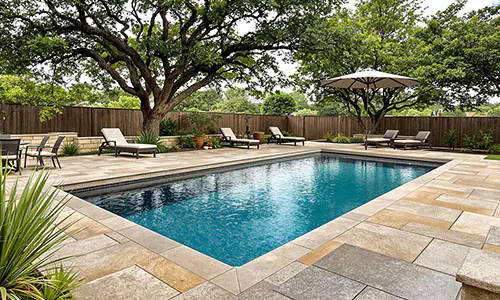
Timeline reality: S-Series typically places and commissions in 1–3 days with 2–3 local pros. Gunite: 3–6+ months and weather-dependent.
Skip the Dig, Save Five Figures
In rock or tight-access sites, excavation costs explode. The S-Series lets you stop digging at rock or go fully on-ground and avoid excavation altogether. Homeowners combine factory pools with direct-hire local trades and keep the contractor margin — often $20,000–$50,000 in savings.
That's not a theoretical advantage. In hard-rock markets across Texas, the Southeast, and mountain regions, excavation alone can be a five-figure surprise that blows a gunite budget. S-Series makes excavation optional instead of mandatory.
Moveable and Future-Friendly
The S-Series ships without oversize permits (modules are ≤ 8'-6" wide), can be rigged by telehandler or small crane, and was designed for easy transportation. You can relocate it with qualified riggers — something you simply don't do with a gunite shell.
And when you upgrade or remodel, the interior membrane is fully recyclable. Architectural Edition panels are 100% recyclable too. A gunite pool, by contrast, ends its life as demolition waste.
"S-Series is a relocatable asset. Gunite is a permanent fixture that ends its life as demolition waste. That distinction matters more than most buyers realize on day one."
The Look — Modern, Premium, and Customizable
Zycore™ offers designer colors, textures, and tile-look finishes. Smooth walls that please the eye and the robot. The surface stays consistent year after year — no fading, no mottling, no acid-wash cycles to restore the original appearance.
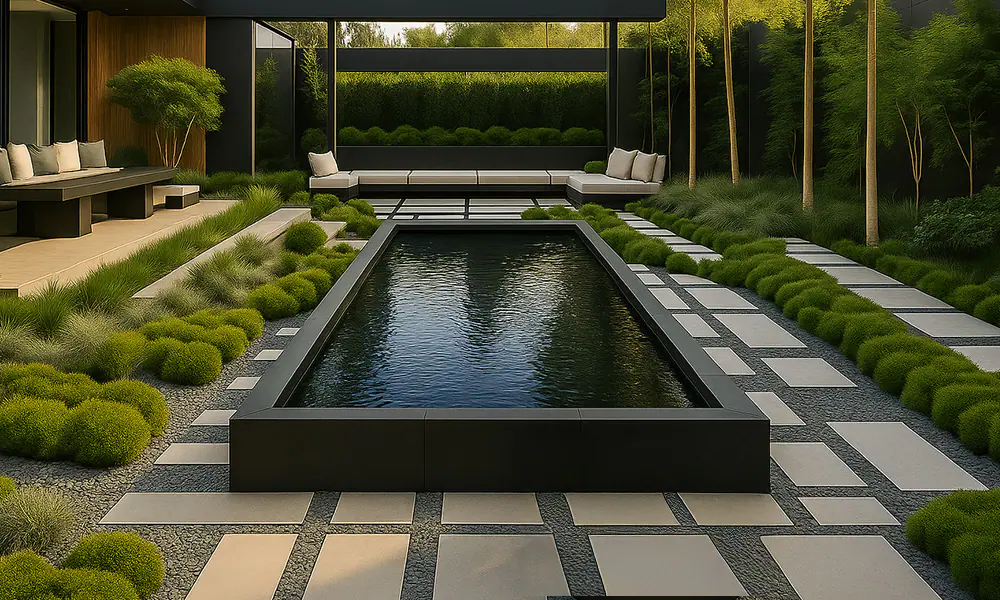
Above-grade Architectural Edition options add viewing windows for an "aquatic theater" experience and a truly modern focal point. Try getting that from a gunite shell buried in the ground.
Data Tables
A) Project Cost and Time Reality
| Item | Traditional Gunite | S-Series + Local Pros |
|---|---|---|
| Builder/GC margin | ~$30,000 | $0 — you hire 2–3 pros |
| Subcontractors & materials | ~$55,000 | ~$30,000 (factory pool incl. equipment) |
| Electrical / site prep / misc | ~$5,000+ | ~$6,500–$10,000 |
| Total | ~$90,000 | ~$40,000 |
| On-site time | 3–6+ months | 1–3 days |
B) Thermal Performance
| Metric | S-Series | Gunite/Concrete |
|---|---|---|
| R-value (walls) | 8.5–10 | ~1.5 |
| Overnight loss (example) | 0.4–0.6°F | 1.8–2.2°F |
| Heater cycles | Lower | Higher |
C) Maintenance and Comfort
| Factor | S-Series | Gunite/Concrete |
|---|---|---|
| Surface porosity | Non-porous | Porous |
| Weekly brushing | Light | Heavy |
| Skin comfort | Smooth | Abrasive |
| Chemical demand | Lower | Higher |
| Long-term issues | Membrane flexes with movement | Etching, staining, replaster cycles |
The Bottom Line
Gunite earned its place — but it also brings long timelines, higher maintenance, thermal inefficiency, and replaster cycles that never stop. The technology hasn't fundamentally changed in decades.
Ecopool S-Series gives you:
- Certainty — factory-built modules, 1–3 days to swim
- Comfort — insulated shell that holds temperature
- Clarity — non-porous finish that stays cleaner with less effort
- Design freedom — inground, on-ground, or semi-inground
- Mobility — a relocatable asset, not a permanent fixture
- Sustainability — recyclable components instead of demolition waste
It's the high-end commercial approach — modernized and priced for homes.
"Ready to skip the six-month build? Contact Ecopool and see what S-Series looks like on your property."
Try it in our free Pool Designer. Design the pool this article describes — shape, size, ledge, spa, decking — and see whether an Ecopool configuration matches.
Design Your Pool: Free Pool Designer: Explore Layouts & Costs