-- No items so far --
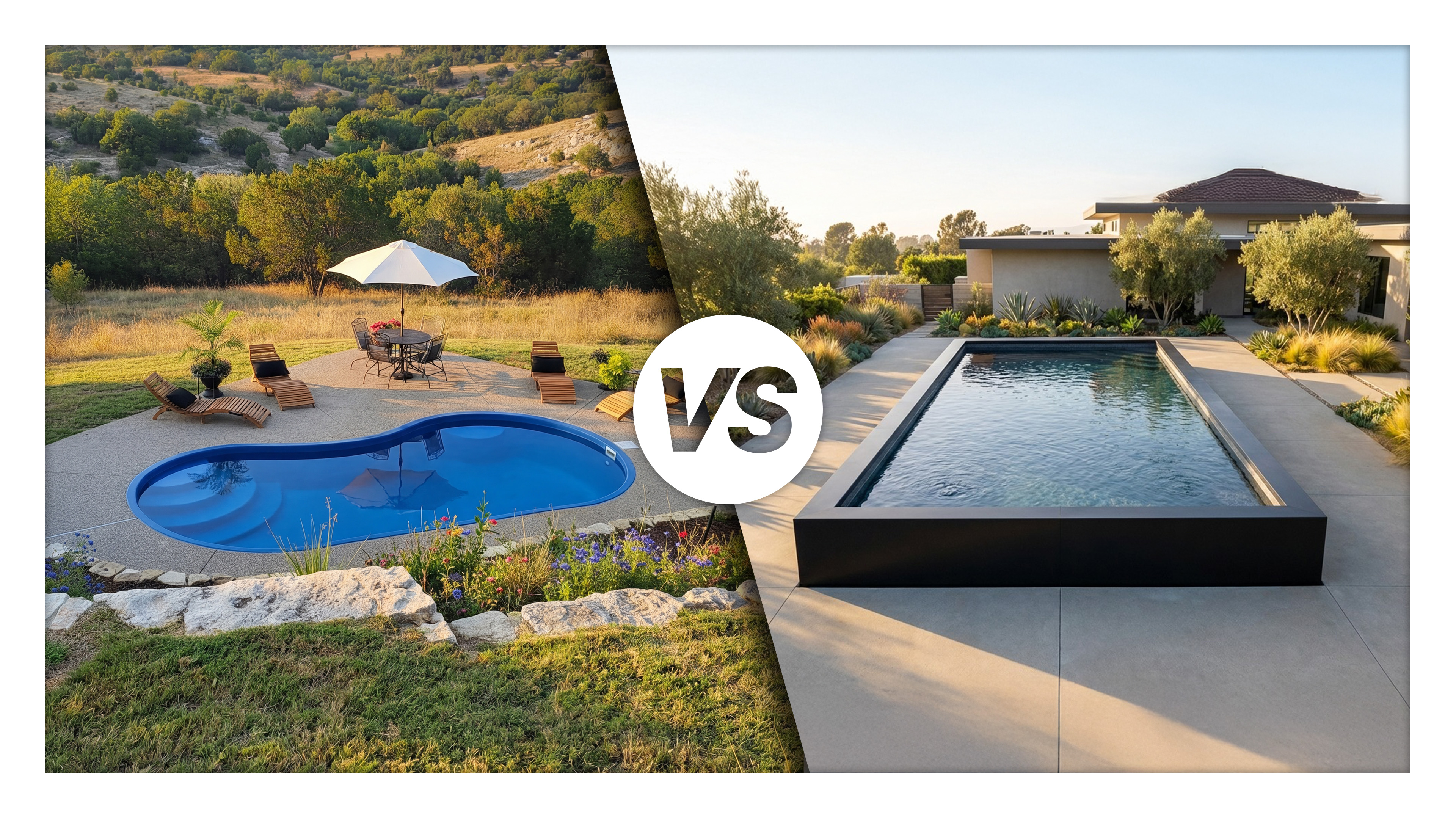
Fiberglass pools earned a reputation for fast installation — and for good reason. But once homeowners dig past the marketing, a list of constraints starts to surface: trucking limits dictate maximum size, cranes and wide-open access are non-negotiable, gelcoat finishes age in ways that require costly repairs, and the shell you pick is the shell you keep — permanently.
If you want a pool that installs with fewer headaches, looks modern, stays cleaner, holds temperature better year-round, and remains flexible for future changes, Ecopool S-Series is the clear winner over fiberglass.
This comparison lays out exactly why.
These are the problems fiberglass buyers tend to discover after they've already signed a contract.
Fiberglass shells are hauled in one piece. Anything wider than 8'-6" is classified as an oversize load, requiring special permits and escort vehicles. In practice, most shells top out around 16 ft wide and 40 ft long — and the logistics cost climbs fast beyond those numbers.
The delivery truck needs a wide, tall, obstacle-free path from the street to the backyard. A long reach from the curb often means a large crane, and when trees, power lines, or narrow gates are in the way, you're looking at tree removal, utility coordination, or street closures before the pool even arrives.
Fiberglass shells rely on properly compacted backfill to hold their shape. Using the wrong material — or compacting poorly — is one of the most common failure modes. Reputable builders specify clean, crushed stone for this reason, but not every crew follows through.
Spider cracks are non-structural, but they're visible and frustrating. They're triggered by localized pressure or flex that exceeds the gelcoat's tolerance, and they tend to appear over time as the shell settles.
When water migrates behind the gelcoat, it can cause osmotic blisters. They're usually cosmetic, but repairs are tedious and not cheap. Vinyl-ester barriers help prevent them, but not every manufacturer uses the same quality of materials.
Gelcoat surfaces fade and chalk under sustained sun exposure and pool chemistry. Surface warranties vary widely in what they actually cover — read the fine print before assuming you're protected.
Fixing chips or dings on a multi-layer colored gelcoat is notoriously hard to blend. Even professionals acknowledge that matching the original finish is difficult, and repaired areas often remain visible.
Like any in-ground pool, a fiberglass shell can "float" if hydrostatic pressure isn't managed properly. Installers rely on dewatering systems and careful procedure, but draining the pool for maintenance always carries risk.
Standard fiberglass shells are designed for fully in-ground placement — or partially out of the ground up to about 18 inches with backfill support. Fully above-ground installations are not recommended without significant engineering.
Yes, you can technically relocate a fiberglass pool, but virtually every manufacturer and installer says the same thing: plan to leave it. Relocation is complex, risky, and expensive.
| Dimension | Ecopool S-Series | Fiberglass |
|---|---|---|
| Design & size freedom | Modular widths shipped under 8'-6" — combine for the footprint you want | Single-piece shell: width ≤16 ft; shapes limited to existing molds |
| Site access | Small crane or telehandler; sections fit tight sites | Truck + large crane; long reaches raise costs and risks |
| Install modes | Inground / on-ground / semi-inground | Primarily inground; only partial above-grade with careful backfill |
| Excavation | Optional — go on-ground and avoid rock entirely | Required; rock conditions create major cost swings |
| Surface | Non-porous architectural membrane with heat-welded seams | Gelcoat over fiberglass laminate; prone to spider cracks, blisters, fading |
| Maintenance | Smooth, inert surface — less brushing, fewer chemicals | Gelcoat care, backfill monitoring, color-match repairs |
| Thermal performance | Insulated wall system for comfort in shoulder seasons | Thin composite shell with no built-in insulation |
| Mobility | Designed to be relocatable with qualified riggers | Plan to leave it once installed |
| Sustainability | Recyclable components; long-life interior | Gelcoat requires resurfacing as finish ages |
Fiberglass is locked into one-piece molds and highway reality: roughly 16-ft maximum width and about 40-ft length for practical transport. If your dream layout is wider, more geometric, or needs a specific step-and-bench arrangement, you're constrained to whatever mold exists — and whatever can physically be hauled to your street.
S-Series flips that equation. It ships in modular sections under 8'-6" (standard-width freight), then assembles into your final footprint on site. You get the layout you want — without begging a crane to reach 150 ft over your roof.
Ask any builder what that crane rental costs. Then ask what happens when the first date falls through and you reschedule.
Fiberglass jobs live or die on three things: site access, crane logistics, and backfill execution. Tight lots, mature trees, overhead power lines — any of these can complicate or kill a delivery. And if sand or improper fill material is used behind the shell, wall bulges happen. Reputable installers insist on clean, crushed stone for good reason — but it still demands perfect execution every time.
S-Series is factory-built and site-friendly. It can go:
That last option alone can save weeks of work, a yard full of mud, and — in rock markets — five-figure excavation surprises.
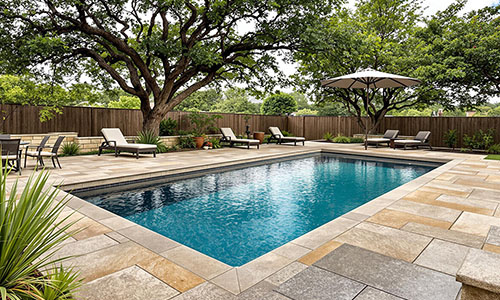
A fiberglass gelcoat looks pristine on day one. Over time, owners encounter a different story:
S-Series uses a commercial-grade, non-porous architectural membrane with heat-welded seams. The surface is smooth on skin, friendly to robotic cleaners, and inherently resistant to algae attachment. There's no brittle coating to crack, no layers to delaminate, and no color-matching nightmare when you need a repair.
Less algae attachment means less brushing, fewer chemicals, and clearer water with less effort. That's not a marginal difference — it's a fundamentally easier ownership experience.
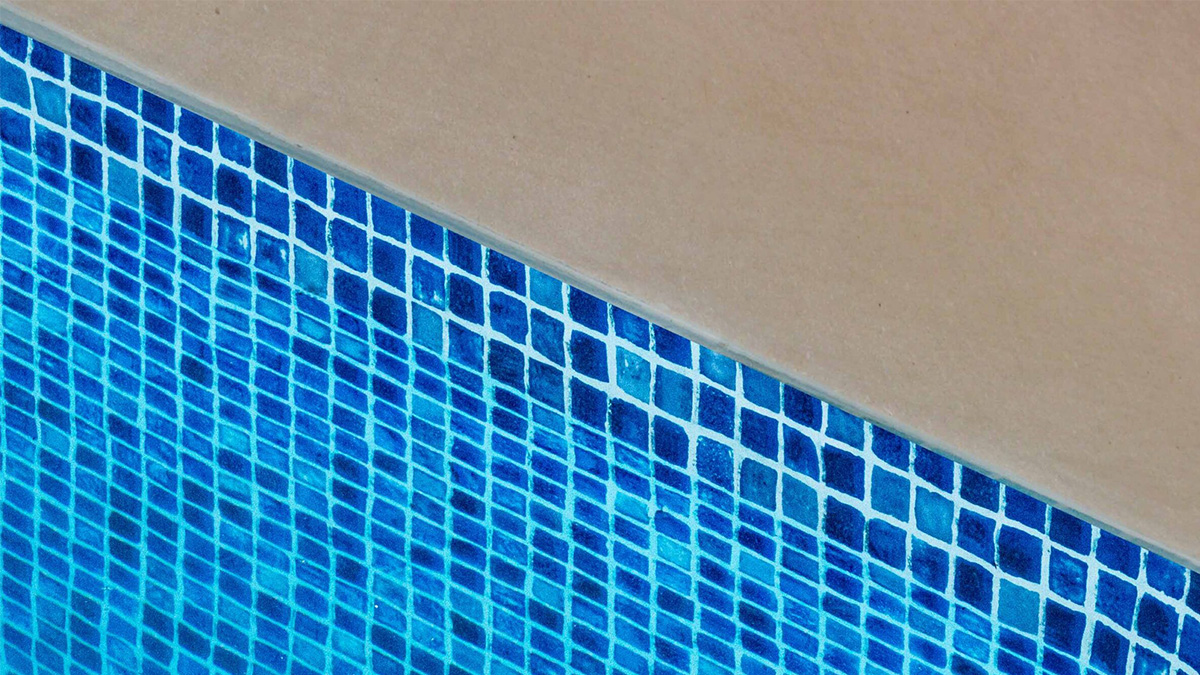
A thin fiberglass composite shell is not insulation. Heat escapes through it in cooler months, and water absorbs ambient heat too quickly in peak summer.
S-Series walls are insulated, so water holds temperature better in shoulder seasons and stays crisper in peak heat. In practice, that means:
Fiberglass shells don't approach S-Series' insulated wall performance. The difference is most obvious in spring and fall — exactly when you want to extend your swim season without watching your energy bill climb.
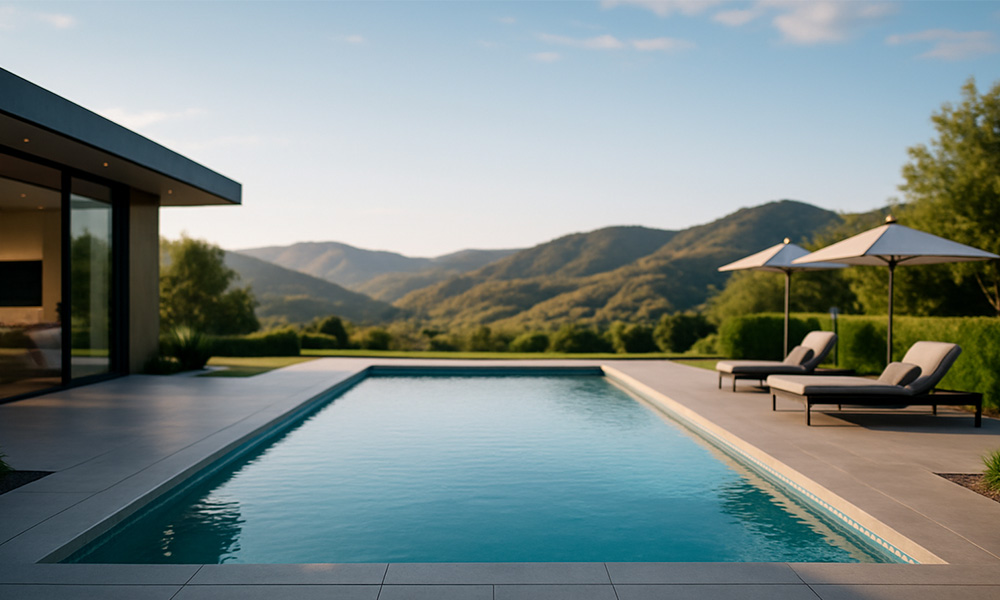
Standard fiberglass guidance discourages fully above-ground installs. Most brands limit you to partial above-grade placement with 18 inches or less exposed — and mandatory backfill support behind the shell. That is not the same as a true above-ground architectural installation.
S-Series was engineered for genuine flexibility:
Want to avoid digging entirely? Choose on-ground. Want a minimalist patio edge? Go inground. Working with a slope? Semi-inground looks sharp and solves the grade problem naturally.
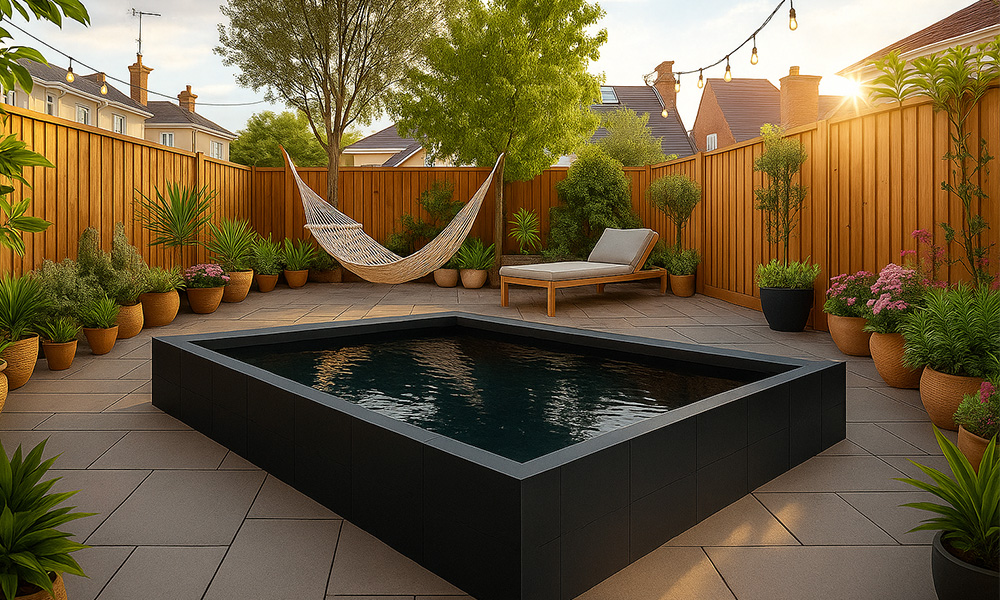
Even fiberglass manufacturers and pool educators say it directly: plan to leave it. Yes, a fiberglass shell can technically be extracted and relocated — but it's not designed for that. The process is risky, expensive, and rarely worth it.
S-Series can be relocated by qualified riggers. If your life moves — new property, job transfer, downsizing — the pool moves with you. It's a real asset that doesn't become a sunk cost tied to a single address.
| Constraint | S-Series | Fiberglass |
|---|---|---|
| Highway width dependence | No — modules ship under 8'-6" | Yes — shells ≤16 ft require oversize permits |
| Access requirement | Tight-site friendly | Wide, tall path for truck + crane |
| Above-grade options | Full on-ground installation | Partial only (≤18") with backfill support |
| Backfill risk | Not applicable | Wrong backfill → wall bulges |
| Relocation | Designed for it | Not recommended |
| Issue | Likelihood | Cause |
|---|---|---|
| Spider cracks | Common over time | Point loads and shell flex on gelcoat |
| Osmotic blisters | Possible | Water intrusion behind gelcoat layer |
| Fading / chalking | Expected with age | UV exposure + pool chemistry |
| Color-match repairs | Difficult | Multi-layer pigments are hard to replicate |
S-Series avoids every issue in the table above. The architectural membrane doesn't crack, blister, fade, or require color matching — because it's not a brittle coating applied over a shell. It's the surface itself.
Fiberglass earned its place in the market with a straightforward value proposition: a factory-built shell, delivered to your yard, set in the ground quickly. That story holds up — until you factor in the fine print.
Trucking width caps dictate your maximum size. Crane access can turn a simple delivery into a logistical project. Backfill execution has to be perfect or walls bulge. Gelcoat finishes age with spider cracks, blisters, fading, and repairs that never quite match. Above-ground options barely exist. And once it's in the ground, it stays there.
Ecopool S-Series removes those constraints:
The result is a better experience on day one and a better asset for the next twenty years.